

Mid-Length
A podcast strategy is essential in modern PR. Appearing as a podcast guest on someone else's show enables brands to connect with engaged audiences in a trusted, long-form format. As media becomes more fragmented and competition for attention increases, podcasts allow PR professionals to communicate brand messages with greater depth, authenticity, and relevance.
For both internal and external PR teams, guest appearances give company spokespeople direct access to their highly loyal following, with minimal effort, often for 30 minutes or more. This level of audience attention is increasingly rare and valuable.
This blog post offers a practical overview of podcasting for PRs:
-
Why podcasting continues to grow in New Zealand
-
The benefits of including podcasts in your PR strategy
-
How to find and pitch podcasts
-
How to prepare for interviews
-
How to track results using media monitoring
Table Of Contents
- Do People Still Listen to Podcasts?
- Benefits of Including Podcasts in Your PR Strategy
- Podcast Communication Strategy for B2C
- How to Find Podcasts
- Contacting Podcast Hosts
- How to Prepare for the Podcast
- Case Studies
- Promoting Your Guest Appearance
- Track Your Results
- Media Monitoring with Streem
- Frequently Asked Questions
Do People Still Listen to Podcasts?
Yes, and podcasts are no longer a niche medium in New Zealand. In fact, listening habits show that podcasts have moved well beyond early adopters into the mainstream media landscape, have captured the audience's attention, and continue to grow.
In its Infinite Dial 2025 Report, Edison Research revealed that audio listenership exceeded TV and video consumption, driven by radio’s resilience and the continued growth in podcast consumption. What's more, the report found that 71% of New Zealanders aged 16 and over had listened to one in the past month, while 36% tuned in during a typical week (rising from 31% in 2023), clear evidence that podcast listening is on a sustained upward trajectory.
These numbers matter for PR professionals for a couple of reasons:
-
First, the sheer volume of listeners means audiences are actively choosing podcasts over other forms of content, giving a good guest a real chance to engage highly attentive and motivated consumers with other podcasters.
-
Second, the number of local shows and episodes, and the diversity of content, means you can reach both broad and highly specific audiences, from national news fans to niche interest groups.
Benefits of Including Podcasts in Your PR Strategy
Podcasts have become a powerful addition to modern PR strategies, whether through guesting on established and relevant shows or by launching and growing an owned podcast. Both approaches allow organisations to communicate with depth, authenticity, and consistency, offering a level of engagement that's difficult to achieve through short-form media alone.
When used strategically, podcasts can support long-term reputation building while providing an opportunity to build trust, showcase expertise, and fuel wider content strategies, without making a hard sell.
Podcasting can be a valuable addition to your PR strategy because it helps to:
1. Build Trust and Credibility
Trust is one of the most valuable outcomes of podcasting, whether your client is appearing as a guest or a host. Podcasts allow audiences to connect with the person behind the brand, their personality, and the values that drive them.
When listeners are given a steady stream of content to tune in to, they often form a strong parasocial relationship with the host, returning week after week because they value the host's perspectives and information. This, in turn, builds authenticity and helps listeners to develop a stronger affinity with the brand over time, as well as a regular habit of consuming that brand's content.
If hosting isn't a strategic priority, you can still reap the benefits of podcasting by having a spokesperson appear as a guest. When a spokesperson for your brand appears on an established and relevant podcast, listeners who've developed trust in the host are more likely to trust your brand by association.
In PR terms, podcasting doesn't just unlock an opportunity for profile building; it’s another avenue for reputation building, too.
2. Strengthen Connection
Podcasts are uniquely personal. The conversational nature of interviews allows listeners to connect with the personalities being presented and to absorb not just the content of the message, but also its nuance, tone, and intent, helping brands feel more human and approachable.
Hosting enables ongoing relationship-building with a loyal listener base, while guesting introduces brands to new audiences through meaningful conversations. For PR professionals, the personal and emotional connection that listeners develop through podcasts supports stronger brand affinity and helps messages resonate more naturally.
3. Reach Engaged Audiences
Not only do podcasts encourage extended audience engagement, but the nature of that engagement runs deeper because audiences are highly engaged by design. Podcast listeners actively choose what to listen to and often consume episodes in full, giving guests and hosts access to sustained attention rather than fleeting impressions. This makes podcasting particularly valuable for reaching niche or highly relevant audiences, as many podcasts are built around a clearly defined target audience with shared interests or professional needs.
As a podcast guest, your brand spokesperson can tap into established audiences built by experienced hosts. Or by hosting your own podcast, you can cultivate an engaged audience for your brand over time. Either way, podcasting opens a new avenue for reaching engaged target audiences that may be difficult to reach through mainstream or social media alone.
4. Showcase Expertise
Podcasts provide the space needed to demonstrate expertise in depth. Through podcast interviews, guests can explore complex topics, share real-world insights and examples, and respond thoughtfully to questions. Hosting a podcast also allows organisations to consistently showcase their expertise by curating conversations, inviting industry experts, and guiding discussions.
Over time, both guesting and hosting reinforce thought leadership goals and position brands as sector authorities, helping organisations stand out.
5. Drive an Economical Content Strategy
From a resource and content perspective, podcasts are highly efficient. Guest appearances and hosted episodes can be repurposed into social media, website, and newsletter clips, quotes, and insights. Hosting a podcast also creates a steady pipeline of reusable content without relying solely on reactive media opportunities.
For PR, the value is two-fold: the podcast itself provides a credible platform, while the subsequent content extends reach and reinforces key messages. By treating podcasts as a central content engine, brands can maximise visibility and impact, ensuring consistent storytelling across channels without the constant need to generate new material from scratch.
Podcast Communication Strategy for B2C
For B2C organisations, podcasting offers an effective channel for building awareness, strengthening brand affinity, and maintaining ongoing consumer engagement. A strong B2C podcast strategy should balance podcast guesting on relevant shows with the longer-term opportunity of hosting your own podcast, depending on objectives, resources, and audience behaviour.
Podcast guesting is often the fastest way for B2C brands to reach new audiences. Appearing as a podcast guest allows brands to tap into existing communities of listeners built by trusted podcast hosts, many of whom reach highly defined, specific audiences. This approach is particularly effective for introducing a brand to new listeners, supporting campaign launches, or aligning with timely cultural or lifestyle conversations.
Hosting a podcast, on the other hand, allows B2C brands to build a direct and ongoing relationship with listeners. A brand-owned podcast creates space to share stories and values that people can relate to in depth, while maintaining full control over messaging and format. Over time, this helps brands develop a loyal audience that regularly engages with their content.
In both cases, success depends on a few key factors that will require you to do some work before you get started.
Understand Your Target Audience
Ask yourself: who are you trying to reach, and why? B2C podcast strategies work best when content is designed for a specific audience, reflecting their interests, challenges, and lifestyle choices rather than focusing on overt promotion. Podcast listeners expect authenticity and relevance, whether they're tuning into a guest interview or a branded podcast.
Identify Your Tone as a Podcast Host
Tone is also critical. Podcasts are an intimate medium, and B2C audiences respond best to conversational, human storytelling. Podcast guests should focus on sharing experiences, insights, and practical takeaways, while podcast hosts should prioritise creating content that feels entertaining, informative, or emotionally resonant.
Maximise Content Value with Podcast Guests
It's important to remember that podcasts should be integrated into a broader PR and marketing ecosystem. Episodes and guest appearances can be amplified through social media, email marketing, and owned channels, extending reach and reinforcing brand messages. When aligned with other PR and marketing activities, both podcast guesting and hosting can play a valuable role in developing brand awareness, trust, and long-term consumer engagement.
B2C Podcast Case Study
New Zealand’s longest-standing property website, realestate.co.nz, has one of the country’s most comprehensive collections of property data, with records dating back more than 18 years. To extend the reach of its data to a wider audience, the realestate.co.nz team began incorporating podcasts into its B2C PR strategy.
"Podcasts have enabled us to add depth and accessibility to complex topics that arise from our comprehensive data pool. And, as a medium, podcasts have given us another platform to connect with listeners on a topic deeply personal to them: the house-buying experience."
— Vanessa Williams, realestate.co.nz
Vanessa Williams, GM for Marketing & Media at realestate.co.nz, says including podcasts alongside traditional media activities such as billboards, social content, press releases, and blogs enables the team to integrate expert voices and multiplatform commentary to extend the brand’s reach and relevance.
Further benefits can arise from the opportunities podcasting offers, including invitations to speak as a keynote, expert panel seats, and greater authority for your brand.
How to Find Podcasts
If the plan is for your client to appear as a podcast guest, finding the right podcasts to feature on is one of the most important steps in the process. When sourcing potential podcasts for collaboration, it's key to remember that a targeted, research-led approach delivers far better results than mass outreach.
Step 1: Define Your Audience and Objectives
This is a vital step in developing the strategy for both podcast guesting and podcast hosting. Before stepping into a studio or letting your client turn on a microphone, clarify who you want to reach and what you want to achieve. Are you speaking to raise awareness of your brand, establish yourself as a thought leader, support the launch of a campaign, or educate the people that listen to you?
Understanding your target audience ensures your podcast guesting efforts are focused and strategic.
Step 2: Research Successful Podcast Categories
Browse podcast platforms such as Apple Podcasts, Spotify, and Google Podcasts. Search by category, keyword, and topic to identify shows relevant to your industry or message. And be sure to pay close attention to new podcasts, as they are often actively seeking guests and may therefore be more open to collaboration.
There are also a range of podcast marketplace platforms specifically designed to connect podcast hosts and guests, making it easy to filter and identify shows that fit your topic, ideal reach, and audience. The top podcast guest directories for 2026 include:
- PodMatch
- MatchMaker.fm
- PodcastGuests.com
- Audry
- Guestio
Podcast search engines such as ListenNotes also let you search for podcasts by topic, location, and audience focus, so you can better identify shows with engaged listeners, new podcasts, and accessible hosts.
Step 3: Assess Fit and Quality
Once you've found podcasts that might be relevant, take some time to listen to recent episodes and get a sense of their format, tone, and production quality. A successful podcast is one where the content style, host approach, and audience expectations and interests align with your spokesperson's expertise.
Step 4: Build a Target List
Create a shortlist of podcasts that caught your attention, and note their contact details, episode themes, and guest preferences. If a host runs multiple shows, listening to other podcasts they produce can provide useful insight into their style and priorities.
Contacting Podcast Hosts
Once you've identified suitable podcasts, the next step is outreach. When contacting podcast hosts, the key to effective outreach is focusing on the value you can bring to the podcast's audience. Hosts care about their listeners and the content they share, so your pitch should explain clearly how your spokesperson's contribution to the conversation will benefit podcast listeners.
In the end, the key is to keep your pitch focused: outline who you are, your expertise in the topic, and what your listeners stand to gain from the conversation.
Personalisation also matters hugely. Referencing recent episodes, acknowledging the host's perspective on a key topic, and suggesting tailored topic ideas demonstrates respect for the show and increases the likelihood of a positive response.
Here's a template you can use when you're ready to submit a podcast guesting pitch:
Hi [Podcast Host's Name],
I've been listening to [Podcast Name] and really enjoyed your recent episode on [specific topic].
I wanted to reach out to see if you're open to featuring a guest who could offer value to your listeners around [relevant theme].
[Name] is [role/company] and has hands-on experience in [brief credential], with insights that align closely with your audience.
If this sounds useful, I'd be happy to suggest a few topic ideas tailored specifically to your podcast listeners.
Thanks for your time,
[Name]
How to Prepare for the Podcast
Preparation is essential for effective podcast guesting. While podcasts are conversational, a lack of preparation can result in missed opportunities or unclear messaging, especially if this is your spokesperson's first podcast appearance.
Before hitting record, make sure your spokesperson:
Listens to Previous Episodes
Your spokesperson should try to build familiarity with the podcast's format and audience, as well as the host's style, prior to their appearance. They might also want to liaise directly with the host in advance to plan any specific questions.
Speaks Confidently
Depending on the podcast's topic or focus, some ideas or insights might require breaking down to aid audience understanding. Make sure your selected spokesperson is a confident communicator who's comfortable explaining even complex ideas in open conversation.
Has the Right Equipment
Your spokesperson can have in-depth subject knowledge and a whole list of insightful anecdotes ready to share, but if the audio equipment isn't up to par, listeners are likely to tune out. A key part of podcast guesting preparation is investing in the right set-up, so be sure to have a quality microphone and a quiet room at the ready.
Understands the Aim
You've secured the spot by focusing on the value offered to established podcast listeners, so make sure your spokesperson understands the core messages they want to convey and doesn't lose sight of the benefit.
Preparing Your Key Message
Every podcast is different, so delivering a standard script isn't the way to go. While they may align with your PR objectives, the messages you share should be adapted to suit each show's audience, tone, and format.
Podcast guesting works best when the guest responds authentically to the host's questions while still reinforcing core points. This balance helps to maintain the audience's attention and ensures your messages resonate.
Case Studies
Podcasts can play very different roles depending on your goals, industry, and audience. The following case studies explore how brands have successfully used podcast guesting and brand-owned podcasts as part of their PR approach.
Case Study: Podcast-First PR
HMC Communications, a three-time winner of the PRINZ PR Consultancy of the Year award, regularly pitches clients to established podcasts, helps them create their own, and produces its own podcast, CRUNCH — “crucial chats over lunch” exploring where strategic communications and business challenges meet.
Such is the value the agency sees in podcasts that Emma Letessier, Senior Account Manager, pitched one client’s expertise to podcasters prior to undertaking a traditional media campaign:
-
“We’ve had fantastic results from pitching our legal client to podcasts,” says Letessier. “For clients who don’t have a lot of media experience, a podcast appearance is an ideal place to start. It’s typically very conversational and gives plenty of room to land key messages.
-
"We were able to align our spokesperson’s expertise with three podcasts that spoke directly to his target audiences. We’ve since shared that content across digital platforms to build brand authority and ensure consistency of messaging, elevating his profile in preparation for ongoing media activity.”
Case Study: Dominating Earned Media Share of Voice in a Declining Media Market
In a competitive market, realestate.co.nz needed to stand out, build trust, and cement its position as New Zealand’s leading property platform. With 18 years of data, it had unmatched market intelligence, but needed to ensure it was seen as the go-to source for agents, sellers and buyers seeking property insights.
A comprehensive PR and communications strategy focused on boosting media impact, credibility, and share of voice while aligning coverage with business goals. Podcasts played a significant part.
With outlets through traditional media reducing, a multi-channel communications strategy was designed to broaden reach and deepen credibility. At its core was regular property reporting, consistently picked up by major outlets and repurposed across realestate.co.nz’s owned platforms.
Expanding beyond traditional PR to engage a wider range of voices, realestate.co.nz connected with key property and finance influencers, forming new media partnerships, and tapping into highly engaged podcast audiences. Emerging trends were turned into timely, agenda-setting stories that positioned realestate.co.nz as a trusted authority in property conversations nationwide.
Realestate.co.nz saw a 323% increase in podcast mentions between 1st April 2025 and 30th September 2025 compared to the previous six months.
Promoting Your Guest Appearance
Podcasting, whether guested or owned, doesn't end when the episode is published. Promotion is essential to maximise reach and impact. Below are a few steps PR teams should take once an episode goes live.
1. Share Across Owned Channels
Promoting podcast interviews via websites, newsletters, email lists, and social media helps to boost reach with existing audiences and reinforces credibility. It also signals the brand's endorsement, encouraging more listeners to tune in.
2. Repurpose Podcast Content
Short clips, quotes, or audiograms can be shared across social media platforms, extending the episode's lifespan and improving traffic generation back to owned channels.
3. Empower the Spokesperson
Providing podcast guests with ready-made assets to share, including captions and links, will boost their confidence to share content with their own audience, helping to reach new listeners and supporting consistent messaging across platforms.
Track Your Results
Tracking the results of podcast guesting and hosting is essential for understanding the impact of your efforts and for demonstrating the value of your PR strategy. Unlike traditional media, where impressions and AVE (Advertising Value Equivalent) were once the primary metrics, podcasts offer more nuanced insights into audience engagement, message resonance, and long-term brand authority. By carefully measuring the right metrics, PR professionals can refine future appearances, optimise messaging, and better justify investment in podcast strategies.
The first step is to identify what success looks like for your podcast activity. Once your PR objectives are clear, you can use several metrics to assess performance and guide future strategy.
Reach and Listeners
Understanding the size of the podcast's audience is fundamental. For podcast guesting, this means estimating the number of listeners per episode and, if available, identifying demographic data. For hosted podcasts, tracking downloads, subscriptions, and listener growth over time helps gauge the success of an owned podcast series. Knowing how many people are tuning in allows PR teams to assess exposure and compare performance against other channels.
Engagement
Engagement goes beyond passive listening. It includes shares, comments, downloads, ratings, and social media listener interactions. Tracking how listeners interact with the content provides insight into which topics resonate, which episodes encourage discussions, and whether key messages are landing. For PR professionals, high engagement often correlates with stronger brand recall and credibility.
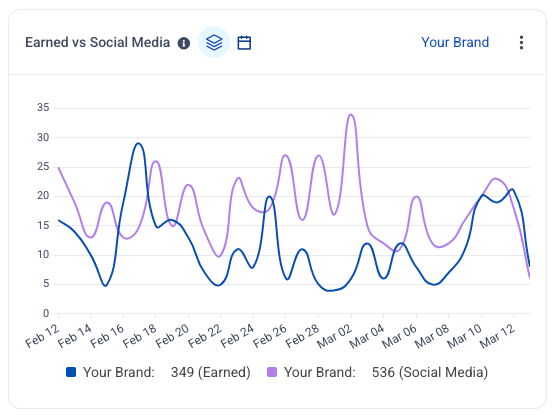
Earned vs Social Media Conversation
Tracking the differentiation in podcast reception between earned and social media is key to identifying where narratives are being picked up, where there are gaps, and what messaging has been most effective where. By measuring the volume of mentions of your brand, the podcast you featured in, your spokesperson, or otherwise, you can keep track of cross-platform conversations.
Share of Voice
Comparing mentions of your brand or spokesperson in podcasts with competitors' gives a sense of your positioning within your industry. Whether you're a guest or a host, understanding your brand's share of voice shows whether you're a leading contributor to conversations in your sector. It also helps to identify gaps and opportunities for future podcast guesting or potential topics.
With Streem Media Monitoring, you can break this metric down by media type and leading publications and outlets for each benchmark, giving you a comprehensive roadmap to focus your outreach and build greater media presence.
Website and Search
Podcasts can drive traffic to websites, landing pages, or social profiles, so monitoring spikes in site visits or branded search queries following a podcast episode helps to quantify the podcast's influence on audience behaviour. This is particularly valuable when integrating podcast guesting into broader PR campaigns or when aiming to convert listeners into potential customers.
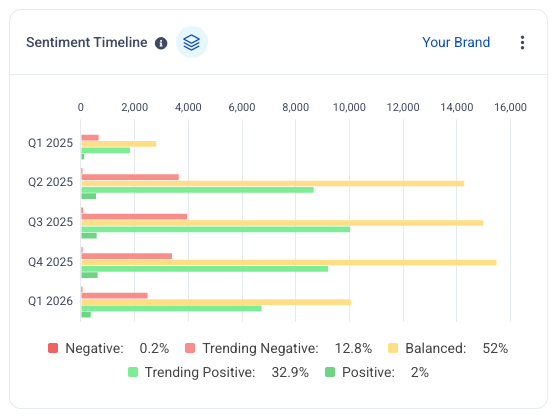
Message Pull-Through and Sentiment
Tracking whether your key messages are being communicated effectively and how they're received by your audience is crucial. Are listeners remembering the points you wanted to emphasise? Is the tone being perceived positively? Monitoring sentiment and measuring message pull-through allows PR teams to evaluate the quality of communication, not just the quantity.
Amplification Across Channels
Podcasts are rarely consumed in isolation. Tracking how episodes are shared on social media and other digital platforms provides a holistic view of reach. For hosted podcasts, monitoring subscriber growth and listener retention gives insights into the ongoing value of the content you're producing. For podcast guesting, noting which episodes are reshared by hosts or listeners can highlight organic amplification.
Lead Generation and Conversion
While more common for B2B strategies, tracking sign-ups, downloads of resources, or enquiries generated through podcast activity can demonstrate tangible ROI. This metric links podcast appearances directly to business outcomes, showing how content consumption drives potential customers and new business opportunities.
By regularly monitoring these metrics, PR teams can refine their approach to both podcast guesting and hosting, experiment with different topics, and optimise future appearances. Tracking results is not just about proving value; it's about making every podcast opportunity more strategic, more impactful, and more aligned with your overall communications goals.
Media Monitoring with Streem
To fully understand the impact of podcast guesting and hosting, PR teams need visibility across all the channels where their content appears. Streem allows you to monitor podcast appearances, mentions, and references across social media, digital publications, and even radio shows, giving a complete picture of your audience reach and engagement.
With Streem, you can:
- Track audience reach and engagement for both guest appearances and your own episodes.
- Measure sentiment and message pull-through to see whether key points resonate with podcast listeners.
- Monitor share of voice against competitors to inform future podcast guesting or hosting opportunities.
- Identify which episodes or clips are amplifying on social media to help refine your promotion strategy.
- Evaluate traffic to your website and branded content that's driven by podcast activity.
Providing real-time insights across these key metrics, Streem helps PR professionals make data-driven decisions, optimise their podcast production strategy, and ensure every appearance or episode contributes meaningfully to broader PR goals. Start tracking your podcast impact with Streem today.
Frequently Asked Questions (FAQs)
Are There Any Benefits to Being a Podcast Guest?
Yes, there are multiple benefits to being a podcast guest. Appearing as a podcast guest allows spokespeople to share their expertise, build credibility, and engage deeply with listeners.
Can Podcast Guesting Help Create a New Audience for Your Brand?
Absolutely. Podcast guesting introduces brands to new listeners who may not engage through traditional media or social channels. Appearing on a successful podcast can significantly expand reach and awareness.